Try the first scene with audio and English translations. No account needed.
Scene illustration unavailable.
Scene 1 · Intermediate
Een plan om de kinderen achter te laten
A plan to leave the children
Dutch
Vlak bij een groot bos woonde een arme houthakker met zijn twee kinderen en zijn vrouw, hun stiefmoeder. De jongen heette Hans en het meisje Grietje. Het gezin had nauwelijks genoeg te eten. Toen er in het hele land een groot tekort aan voedsel ontstond, kon de houthakker zelfs niet meer voor het dagelijkse brood zorgen.
English translation
Near a large forest lived a poor woodcutter with his two children and his wife, their stepmother. The boy was called Hansel and the girl Gretel. The family barely had enough to eat. When a severe food shortage struck the whole country, the woodcutter could no longer even provide their daily bread.
Dutch
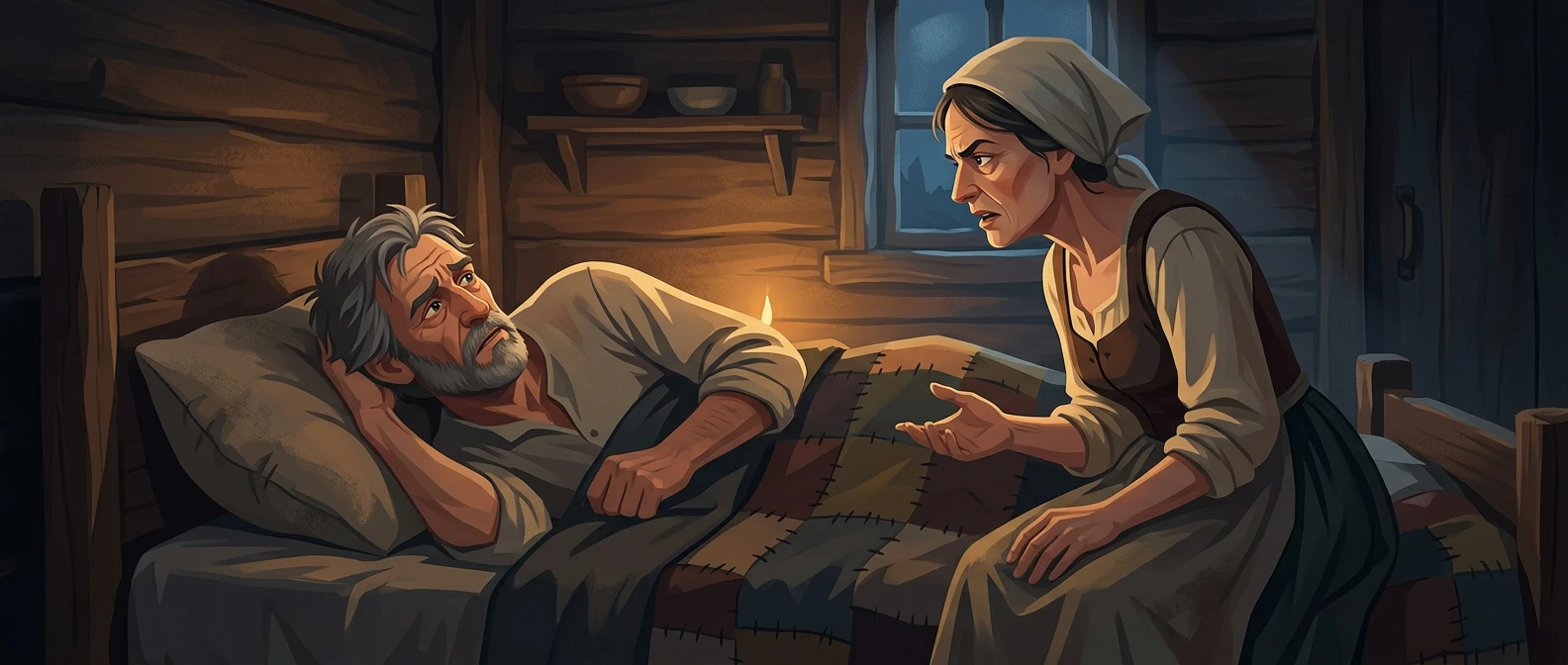
Op een nacht lag hij bezorgd te woelen in bed. Met een diepe zucht vroeg hij zijn vrouw: ‘Wat moet er van ons worden? Hoe kunnen we onze kinderen te eten geven als we zelf niets meer hebben?’
English translation
One night, he lay tossing and turning with worry. With a deep sigh, he asked his wife, “What will become of us? How can we feed our children when we have nothing left ourselves?”
Dutch
‘Weet je wat we doen?’ antwoordde ze. ‘Morgenochtend nemen we ze mee naar het dichtstbegroeide deel van het bos. We maken een vuur, geven ze allebei een stuk brood en gaan dan aan het werk. We laten ze daar achter. Ze zullen de weg naar huis niet meer vinden, en dan zijn we van ze af.’
English translation
“Do you know what we should do?” she replied. “Tomorrow morning, we’ll take them to the thickest part of the forest. We’ll make a fire, give them both a piece of bread, and then go to work. We’ll leave them there. They won’t find their way home, and then we’ll be rid of them.”
Dutch
‘Nee, dat doe ik niet,’ zei de man. ‘Ik kan mijn kinderen toch niet zomaar in het bos achterlaten? De wilde dieren zouden komen en ze verscheuren.’
English translation
“No, I won’t do that,” the man said. “I can’t just leave my children in the forest! The wild animals would come and tear them to pieces.”
Dutch
‘Doe niet zo dwaas!’ zei zijn vrouw. ‘Anders sterven we alle vier van de honger. Dan kun je net zo goed alvast onze doodskisten gaan maken.’
English translation
“Don’t be foolish!” his wife said. “Otherwise, all four of us will starve to death. You might as well start making our coffins now.”
Dutch
Ze bleef aandringen tot hij toegaf. Toch zei hij nog: ‘Maar ik heb zo’n medelijden met die arme kinderen.’
English translation
She kept insisting until he gave in. Even so, he still said, “But I feel so sorry for those poor children.”
Continue with Hans en Grietje
A 3-day trial or membership unlocks the full story and its available reading levels. No card required for the trial.
Open the reader, then choose a level in Reading options. Find a version you can follow comfortably, and return to the same story at a higher level when you are ready.
Can I hide the English translation?
Yes. In Reading options, you can show the English translation beside or below the story, or hide it.
Will it remember where I stopped?
Your account saves your reading and audio position. You need to be signed in with a working connection to save your progress.
Is this story free?
Read this story during your three-day full library trial or with membership. No card is required to start the trial, and there are no automatic charges.