Try the first scene with audio and English translations. No account needed.
Scene illustration unavailable.
Scene 1 · Intermediate
Terv a gyerekek elhagyására
A plan to leave the children
Hungarian
Egy nagy erdő közelében élt egy szegény favágó a feleségével és két gyerekével. A fiút Jancsinak, a lányt Juliskának hívták; az asszony a mostohaanyjuk volt. A családnak alig jutott ennivaló. Amikor az országban súlyos élelmiszerhiány kezdődött, az apa már a napi kenyeret sem tudta megszerezni.
English translation
A poor woodcutter lived near a great forest with his wife and two children. The boy was called Hansel and the girl Gretel; the woman was their stepmother. The family had barely enough to eat. When a severe food shortage began in the country, the father could no longer even get their daily bread.
Hungarian
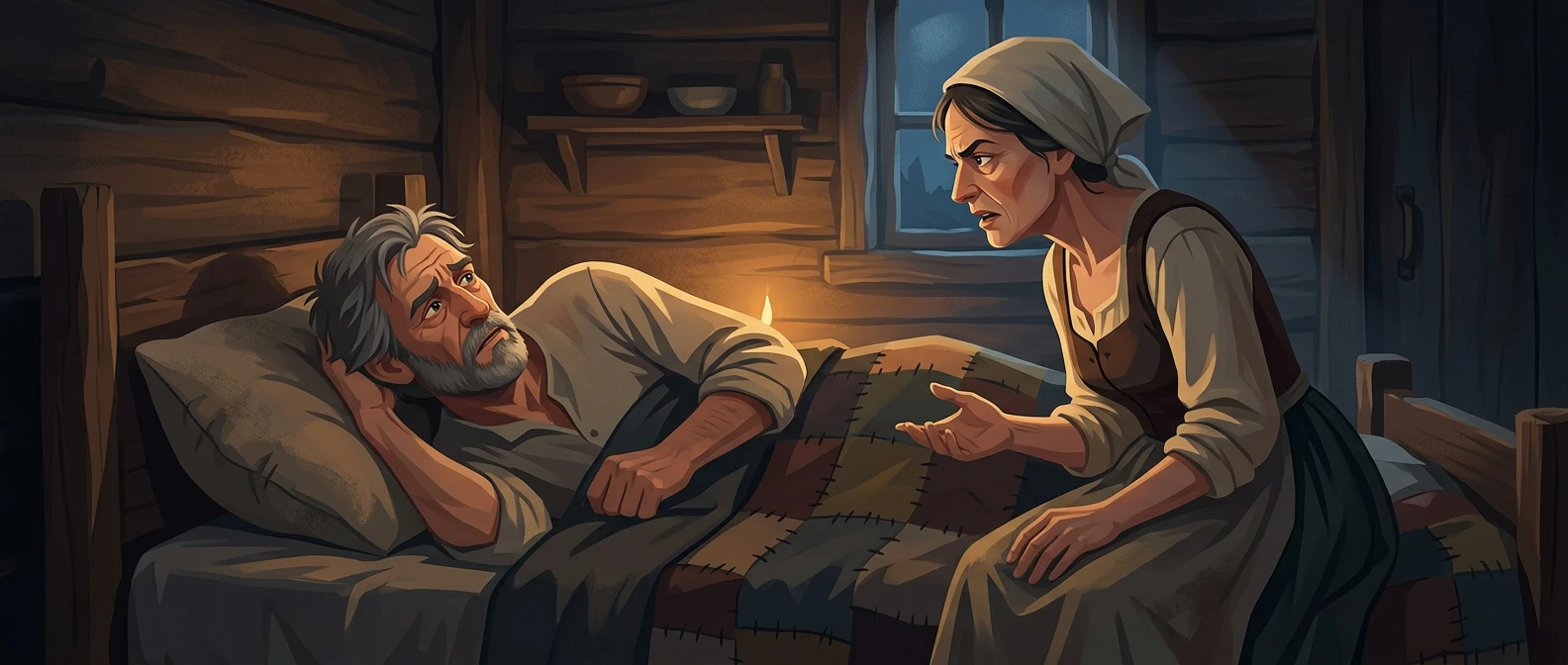
Egy éjjel aggodalmasan forgolódott az ágyában, majd felsóhajtott:
– Mi lesz velünk? Hogyan etessük a gyerekeket, amikor már magunknak sincs mit ennünk?
English translation
One night, he tossed and turned anxiously in bed, then sighed:
“What will become of us? How can we feed the children when we don’t even have anything to eat ourselves?”
Hungarian
– Tudod mit, férjem? – felelte az asszony. – Holnap kora reggel elvisszük őket az erdő legsűrűbb részébe. Tüzet rakunk, adunk nekik egy-egy darab kenyeret, aztán elmegyünk dolgozni, és ott hagyjuk őket. Nem fogják megtalálni a hazavezető utat, mi pedig megszabadulunk tőlük.
English translation
“You know what, husband?” the woman replied. “Tomorrow, early in the morning, we’ll take them to the thickest part of the forest. We’ll light a fire, give each of them a piece of bread, then go off to work and leave them there. They won’t find their way home, and we’ll be rid of them.”
Hungarian
– Nem, ezt nem teszem meg – tiltakozott az apa. – Hogyan hagyhatnám magukra a gyermekeimet? A vadállatok hamarosan rájuk találnának, és széttépnék őket.
English translation
“No, I won’t do that,” the father protested. “How could I leave my children all alone? The wild animals would soon find them and tear them apart.”
Hungarian
– Te bolond! Akkor mind a négyen éhen halunk! Már készítheted is a deszkákat a koporsóinkhoz!
English translation
“You fool! Then all four of us will starve to death! You might as well start making the planks for our coffins!”
Hungarian
Az asszony addig nem hagyta békén a férjét, amíg az végül beleegyezett.
English translation
The woman wouldn’t leave her husband alone until he finally agreed.
Hungarian
– De nagyon sajnálom szegény gyerekeket – mondta az apa.
English translation
“But I feel so sorry for the poor children,” the father said.
Continue with Jancsi és Juliska
A 3-day trial or membership unlocks the full story and its available reading levels. No card required for the trial.
Open the reader, then choose a level in Reading options. Find a version you can follow comfortably, and return to the same story at a higher level when you are ready.
Can I hide the English translation?
Yes. In Reading options, you can show the English translation beside or below the story, or hide it.
Will it remember where I stopped?
Your account saves your reading and audio position. You need to be signed in with a working connection to save your progress.
Is this story free?
Read this story during your three-day full library trial or with membership. No card is required to start the trial, and there are no automatic charges.