
Learn languages through stories you can actually understand.
Read and listen to familiar graded stories and audiobooks adapted to your level.
Little Red Riding Hood

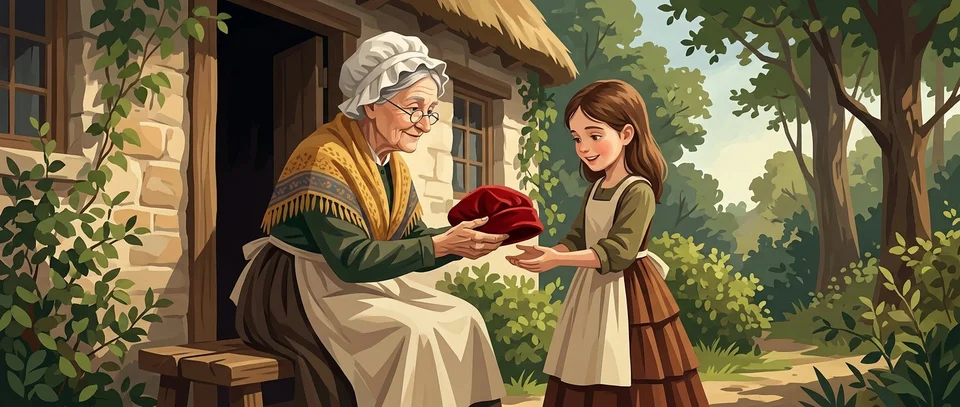
Un día le regaló una caperuza roja, una especie de gorro de terciopelo. Le quedaba tan bien que la niña no quería usar otra. Desde entonces, todos la llamaban Caperucita Roja.
One day, she gave her a red hood, a kind of velvet cap. It suited her so well that she didn’t want to wear anything else. From then on, everyone called her Little Red Riding Hood.
Celle-ci lui a offert un jour un petit bonnet de velours rouge. Il lui allait si bien que la fillette voulait toujours le porter. Tout le monde l’appelait donc le Petit Chaperon rouge.
One day, her grandmother gave her a little red velvet cap. It suited her so well that the girl always wanted to wear it. So everyone called her Little Red Riding Hood.
Eines Tages schenkte sie ihm eine kleine Mütze aus rotem Samt. Die Mütze stand dem Mädchen so gut, dass es keine andere mehr tragen wollte. Deshalb nannten es alle Rotkäppchen.
One day she gave her a little red velvet cap. The cap suited the girl so well that she didn’t want to wear any other one. That is why everyone called her Little Red Riding Hood.
La nonna le vuole molto bene e un giorno le regala un cappuccetto di velluto rosso. Alla bambina piace tanto e vuole portarlo sempre. Per questo tutti la chiamano Cappuccetto Rosso.
Her grandmother loves her very much, and one day she gives her a little red velvet hood. The girl likes it so much that she wants to wear it all the time. That’s why everyone calls her Little Red Riding Hood.
Um dia, deu à menina um gorrinho de veludo vermelho. A menina gostou tanto dele que não queria usar outro. Por isso, todos passaram a chamá-la de Chapeuzinho Vermelho.
One day, she gave the girl a little red velvet cap. The girl liked it so much that she didn’t want to wear any other cap. So everyone started calling her Little Red Riding Hood.
Pewnego dnia podarowała jej mały kapturek z czerwonego aksamitu. Dziewczynce tak się spodobał, że nie chciała nosić niczego innego na głowie. Dlatego wszyscy nazywali ją Czerwonym Kapturkiem.
One day, she gave her a little hood made of red velvet. The girl liked it so much that she didn’t want to wear anything else on her head. That was why everyone called her Little Red Riding Hood.
Într-o zi, i-a dăruit o scufiță, o căciuliță de catifea roșie. Fetiței îi stătea atât de bine cu ea, încât nu mai voia să poarte altceva pe cap. De aceea, toată lumea îi spunea Scufița Roșie.
One day, she gave her a little hood, a red velvet cap.It suited the little girl so well that she no longer wanted to wear anything else on her head. That was why everyone called her Little Red Riding Hood.
Egyszer egy kis piros bársonysapkát adott neki ajándékba. A sapka nagyon jól állt a kislánynak, és mindig ezt akarta viselni. Ezért mindenki Piroskának hívta.
One day, her grandmother gave her a little red velvet cap as a present. The cap suited the girl very well, and she always wanted to wear it. That was why everyone called her Little Red Riding Hood.
Op een dag gaf grootmoeder haar een mutsje van rood fluweel, een zachte stof. Het mutsje stond haar zo goed dat ze het altijd wilde dragen. Daarom noemde iedereen haar Roodkapje.
One day her grandmother gave her a little cap made of red velvet, a soft fabric. The cap suited her so well that she always wanted to wear it. That is why everyone called her Little Red Riding Hood.
Однажды бабушка подарила внучке шапочку из красного бархата. Девочке так нравилась эта мягкая шапочка, что она всегда носила только её. Поэтому все стали звать девочку Красной Шапочкой.
One day, her grandmother gave her a little red velvet cap. The girl liked the soft cap so much that she always wore it and no other. So everyone began calling her Little Red Riding Hood.
Hennes mormor tyckte särskilt mycket om henne och gav henne en röd luva av sammet. Flickan ville alltid ha luvan på sig. Därför kallade alla henne Rödluvan.
Her grandmother on her mother's side was especially fond of her and gave her a red velvet hood. The girl always wanted to wear it. That is why everyone called her Little Red Riding Hood.
En dag ga hun jenta en liten rød hette. Jenta likte hetten så godt at hun ville ha den på hver dag. Derfor kalte alle henne Rødhette.
One day she gave the girl a little red hood. The girl liked the hood so much that she wanted to wear it every day. That was why everyone called her Little Red Riding Hood.
Hendes bedstemor var særlig glad for hende og gav hende en lille hue af rødt fløjl. Pigen kunne så godt lide huen at hun altid gik med den. Derfor kaldte alle hende Rødhætte.
Her grandmother was especially fond of her and gave her a little red velvet cap. The girl liked the cap so much that she wore it all the time. That’s why everyone called her Little Red Riding Hood.
Μια μέρα του έδωσε ένα σκουφάκι από κόκκινο βελούδο. Το κορίτσι αγαπούσε τόσο πολύ αυτό το σκουφάκι που ήθελε να το φοράει συνέχεια. Γι’ αυτό όλοι το έλεγαν Κοκκινοσκουφίτσα.
One day she gave her a little red velvet cap.The girl loved the cap so much that she wanted to wear it all the time. That is why everyone called her Little Red Riding Hood.

Por la noche estaba agotada, pero no tenía cama. Dormía junto al fuego, entre las cenizas. Por eso siempre estaba sucia y la llamaban Cenicienta.
At night she was exhausted, but she had no bed. She slept beside the fire, among the ashes. That's why she was always dirty, and they called her Cinderella.
Le soir, sans lit, elle dormait près du feu, dans les cendres. Comme elle était toujours sale, on l’appelait Cendrillon.
At night, with no bed, she slept by the fire in the ashes. Because she was always dirty, they called her Cinderella.
Abends war das Mädchen sehr müde, hatte aber kein Bett. Es musste am Herd in der Asche schlafen. Deshalb war es immer voller Staub und Schmutz. Die Schwestern nannten es nun Aschenputtel.
In the evenings, the girl was very tired, but she had no bed. She had to sleep in the ashes by the hearth. That was why she was always covered in dust and dirt. From then on, her stepsisters called her Cinderella.
La sera è stanchissima, ma non ha un letto. Deve dormire vicino al fuoco, nella cenere. Per questo è sempre sporca e tutti la chiamano Cenerentola.
In the evening, she is very tired, but she has no bed. She has to sleep by the fire, in the ashes. That is why she is always dirty and everyone calls her Cinderella.
À noite, estava muito cansada, mas não tinha cama. Dormia perto do fogo, nas cinzas. Por isso, vivia suja, e as irmãs passaram a chamá-la de Cinderela.
At night, she was very tired, but she had no bed. She slept near the fire, in the ashes. That was why she was always dirty, and her sisters began calling her Cinderella.
Wieczorem nie mogła położyć się do łóżka, bo go nie miała. Spała w kuchni przy ogniu, w popiele. Dlatego zawsze była brudna, a siostry nazywały ją Kopciuszkiem.
In the evening, she couldn't go to bed because she didn't have one. She slept in the kitchen by the fire, in the ashes. So she was always dirty, and her stepsisters called her Cinderella.
Seara era foarte obosită, dar nu avea pat. Dormea în cenușa de lângă foc. Din cauza aceasta, hainele și fața îi erau mereu murdare. Așa au început să-i spună Cenușăreasa.
In the evening she was very tired, but she had no bed. She slept in the ashes beside the fire. Because of this, her clothes and face were always dirty. That was how they began to call her Cinderella.
Este nagyon fáradt volt, de nem volt ágya. A tűzhely mellett, a hamuban aludt. Emiatt mindig poros és piszkos volt, ezért Hamupipőkének nevezték.
In the evening, she was very tired, but she had no bed. She slept in the ashes beside the stove. That was why she was always dusty and dirty, so they called her Cinderella.
Ze had geen bed en moest ’s nachts bij het vuur in de as slapen. Daardoor was ze altijd vuil en stoffig. De zussen noemden haar daarom Assepoester.
She had no bed and had to sleep in the ashes by the fire at night. As a result, she was always dirty and dusty. That was why her stepsisters called her Cinderella.
Вечером она очень уставала, но своей кровати у неё не было. Она спала на кухне возле огня, прямо в золе. Поэтому её лицо и одежда всегда были грязными. Сёстры стали называть её Золушкой.
By evening she was very tired, but she had no bed of her own. She slept in the kitchen by the fire, right in the ashes. That was why her face and clothes were always dirty. The sisters began calling her Cinderella.
När arbetet var klart hade flickan ingen säng. Hon sov i askan bredvid elden. Eftersom hon alltid var smutsig av aska kallade systrarna henne Askungen.
When the work was done, the girl had no bed. She slept in the ashes beside the fire. Because she was always dirty with ashes, the sisters called her Cinderella.
Hun hadde ingen seng og måtte sove i asken ved ilden. Fordi hun alltid var skitten av aske, kalte de henne Askepott.
She had no bed and had to sleep in the ashes by the fire.Because she was always dirty with ash, they called her Cinderella.
Om aftenen havde hun ingen seng og sov i asken ved ilden. Hun var altid snavset af aske, så de kaldte hende Askepot.
At night she had no bed and slept in the ashes by the fire.She was always dirty with ashes, so they called her Cinderella.
Δεν είχε κρεβάτι και κοιμόταν δίπλα στο τζάκι, μέσα στις στάχτες. Έτσι ήταν πάντα βρόμικη και σκονισμένη, και όλοι την έλεγαν Σταχτοπούτα.
She had no bed and slept beside the fireplace, in the ashes. So she was always dirty and dusty, and everyone called her Cinderella.

El zorro siguió saltando una y otra vez para alcanzar las uvas, pero no pudo. Al final dejó de intentarlo y se alejó con la nariz en alto. «Estoy seguro de que están agrias», dijo.
The fox kept jumping again and again to reach the grapes, but he couldn’t. At last he stopped trying and walked away with his nose in the air. “I’m sure they’re sour,” he said.
Le renard a essayé plusieurs fois d'atteindre ces raisins qui lui donnaient envie de manger. Finalement, il a abandonné. Il est parti, le nez levé, en disant : « Je suis sûr qu'ils sont acides. »
The fox tried several times to reach those tempting grapes. Finally, he gave up. He walked away with his nose in the air, saying: “I’m sure they’re sour.”
Der Fuchs möchte die Trauben so gern haben, dass er immer wieder nach ihnen springt. Doch keiner seiner Sprünge reicht aus. Schließlich muss er aufgeben. Mit hoch erhobener Nase geht er davon und sagt: „Die sind bestimmt sauer.“
The fox wants the grapes so badly that he keeps jumping for them. But none of his jumps is high enough. At last, he has to give up. With his nose held high, he walks away and says, “They must be sour.”
L'uva sembra buona e la volpe prova ancora più volte a raggiungerla. Alla fine, però, smette di provare. Si allontana con il naso in alto e dice: «Sono sicuro che quest'uva non è ancora matura».
The grapes look good, and the fox tries several more times to reach them. In the end, though, it stops trying. It walks away with its nose held high and says: “I’m sure these grapes aren’t ripe yet.”
A raposa tentou alcançar as uvas muitas outras vezes, mas não conseguiu. Por fim, desistiu. Ela foi embora com o nariz levantado e disse: — Tenho certeza de que estão azedas.
The fox tried to reach the grapes many more times, but couldn't. At last, she gave up. She walked away with her nose in the air and said: “I’m sure they’re sour.”
Lis nadal chciał zjeść winogrona i próbował ich dosięgnąć jeszcze wiele razy. W końcu zrezygnował. Uniósł nos i odszedł, mówiąc: – Jestem pewien, że te winogrona są kwaśne.
The fox still wanted to eat the grapes and tried many more times to reach them. At last, he gave up. He lifted his nose and walked away, saying: “I’m sure those grapes are sour.”
Vulpea își dorea mult strugurii și a încercat de mai multe ori să ajungă la ei. Până la urmă însă, a renunțat. A plecat cu capul sus, ca și cum strugurii nu mai erau importanți pentru ea. — Sigur sunt acri! a spus vulpea.
The fox wanted the grapes very much and tried several times to reach them. In the end, though, she gave up. She walked away with her head held high, as if the grapes were no longer important to her. “Surely they're sour!” said the fox.
A róka újra meg újra felugrott, mert nagyon szerette volna megenni a szőlőt. Végül azonban feladta. Magasra emelte az orrát, és elindult. Közben azt mondta: – Biztosan savanyú.
The fox jumped again and again because it really wanted to eat the grapes. But at last it gave up. It lifted its nose high and walked away. As it did, it said: “Surely they’re sour.”
De vos bleef het proberen, maar hij kon de druiven niet bereiken. Uiteindelijk gaf hij het op. Met zijn neus in de lucht liep hij weg. ‘Ik weet zeker dat ze zuur zijn’, zei hij.
The fox kept trying, but he couldn’t reach the grapes. In the end, he gave up. With his nose in the air, he walked away. “I’m sure they’re sour,” he said.
Лис прыгал снова и снова, но никак не мог достать виноград. В конце концов он перестал прыгать. Он поднял голову и пошёл прочь. «Уверен, виноград кислый», — сказал лис.
The fox jumped again and again, but he just couldn't reach the grapes. In the end, he stopped jumping. He raised his head and walked away. “I'm sure the grapes are sour,” said the fox.
Räven ville fortfarande ha druvorna, så han hoppade flera gånger till. Till slut gav han upp. Han höll nosen högt när han gick därifrån. ”De är säkert sura”, sa han.
The fox still wanted the grapes, so he jumped several more times. At last he gave up. He walked away with his nose in the air. “They must be sour,” he said.
Reven hadde fortsatt lyst på druene, så han hoppet flere ganger. Til slutt ga han opp. Han gikk sin vei med hodet høyt. «De druene er sikkert sure», sa han.
The fox still wanted the grapes, so he jumped several more times. At last he gave up. He walked away with his head held high. “Those grapes are probably sour,” he said.
Ræven sprang igen og igen, men han kunne stadig ikke nå druerne. Til sidst gav han op. Han løftede hovedet og gik sin vej. »Jeg er sikker på at de er sure,« sagde han.
The fox jumped again and again, but he still couldn’t reach the grapes. Finally, he gave up. He lifted his head and walked away. “I’m sure they’re sour,” he said.
Η αλεπού συνέχισε να πηδάει για να φτάσει τα σταφύλια, αλλά δεν τα κατάφερε. Στο τέλος σταμάτησε να προσπαθεί. «Είμαι σίγουρη πως είναι ξινά», είπε κι έφυγε.
The fox kept jumping to reach the grapes, but she didn’t succeed. In the end, she stopped trying. “I'm sure they're sour,” she said, and walked away.
Use your device’s volume buttons.


How LingoPlasty works
Join our founder for a quick demo of how to read and listen to stories at your level.
Stories adapted to your level
Start with simple sentences or explore a richer telling. See how the same scene from Little Red Riding Hood reads at three levels.
Spanish adaptations
-
Absolute Beginner
Un día le regala una caperuza roja, un gorro para la cabeza. A la niña le gusta tanto que siempre la usa.
Browse Spanish absolute beginner stories -
Beginner
Un día le regaló una caperuza roja, una especie de gorro de terciopelo. Le quedaba tan bien que la niña no quería usar otra.
Browse Spanish beginner stories -
Intermediate
En una ocasión le regaló una caperuza de terciopelo rojo que le quedaba tan bien que la niña ya no quiso ponerse ninguna otra. De ahí que todos empezaran a llamarla Caperucita Roja.
Browse Spanish intermediate stories
Danish adaptations
-
Absolute Beginner
En dag giver bedstemoren hende en rød hue. Pigen vil altid have den på.
Browse Danish absolute beginner stories -
Beginner
Hendes bedstemor var særlig glad for hende og gav hende en lille hue af rødt fløjl. Pigen kunne så godt lide huen at hun altid gik med den.
Browse Danish beginner stories -
Intermediate
En dag fik pigen en lille hue af rødt fløjl af sin bedstemor. Den klædte hende så godt, at hun aldrig ville gå med andet.
Browse Danish intermediate stories
German adaptations
-
Absolute Beginner
Sie schenkt ihm ein rotes Käppchen. Das ist eine kleine Mütze.
Browse German absolute beginner stories -
Beginner
Eines Tages schenkte sie ihm eine kleine Mütze aus rotem Samt. Die Mütze stand dem Mädchen so gut, dass es keine andere mehr tragen wollte.
Browse German beginner stories -
Intermediate
Eines Tages schenkte sie ihm ein kleines Käppchen aus rotem Samt. Es stand dem Mädchen so gut, dass es bald nichts anderes mehr auf dem Kopf tragen wollte.
Browse German intermediate stories
Greek adaptations
-
Absolute Beginner
Ένα μικρό κορίτσι έχει ένα κόκκινο σκουφάκι. Είναι δώρο από τη γιαγιά της.
Browse Greek absolute beginner stories -
Beginner
Μια μέρα του έδωσε ένα σκουφάκι από κόκκινο βελούδο. Το κορίτσι αγαπούσε τόσο πολύ αυτό το σκουφάκι που ήθελε να το φοράει συνέχεια.
Browse Greek beginner stories -
Intermediate
Μια μέρα η γιαγιά τού χάρισε ένα σκουφάκι από κόκκινο βελούδο. Του πήγαινε τόσο πολύ, που το κοριτσάκι δεν ήθελε πια να φορέσει άλλο σκουφί.
Browse Greek intermediate stories
English adaptations
-
Absolute Beginner
She gives the girl a little red cap. The girl loves this cap and always wears it.
Browse English absolute beginner stories -
Beginner
One day, she gave the girl a little red velvet cap. The girl liked it so much that she always wore it.
Browse English beginner stories -
Intermediate
One day she gave the child a small red velvet cap. It suited the girl so well that she refused to wear anything else on her head, and everyone began calling her “Little Red-Cap.”
Browse English intermediate stories
Spanish adaptations
-
Absolute Beginner
Un día le regala una caperuza roja, un gorro para la cabeza. A la niña le gusta tanto que siempre la usa.
Browse Spanish absolute beginner stories -
Beginner
Un día le regaló una caperuza roja, una especie de gorro de terciopelo. Le quedaba tan bien que la niña no quería usar otra.
Browse Spanish beginner stories -
Intermediate
En una ocasión le regaló una caperuza de terciopelo rojo que le quedaba tan bien que la niña ya no quiso ponerse ninguna otra. De ahí que todos empezaran a llamarla Caperucita Roja.
Browse Spanish intermediate stories
French adaptations
-
Absolute Beginner
Elle lui donne un petit bonnet rouge en velours. La fille aime ce bonnet et le porte toujours.
Browse French absolute beginner stories -
Beginner
Celle-ci lui a offert un jour un petit bonnet de velours rouge. Il lui allait si bien que la fillette voulait toujours le porter.
Browse French beginner stories -
Intermediate
Un jour, elle lui a offert un petit bonnet de velours rouge qui lui allait à merveille. La fillette ne voulant plus porter autre chose sur la tête, on a pris l’habitude de l’appeler le Petit Chaperon rouge.
Browse French intermediate stories
Hungarian adaptations
-
Absolute Beginner
Egy piros sapkát ad neki. A kislány nagyon szereti ezt a sapkát.
Browse Hungarian absolute beginner stories -
Beginner
Egyszer egy kis piros bársonysapkát adott neki ajándékba. A sapka nagyon jól állt a kislánynak, és mindig ezt akarta viselni.
Browse Hungarian beginner stories -
Intermediate
Egyszer egy piros bársonysapkával ajándékozta meg. A sapka olyan jól állt a kislánynak, hogy többé semmi mást nem akart a fejére tenni.
Browse Hungarian intermediate stories
Italian adaptations
-
Absolute Beginner
Una bambina ha un cappuccetto di velluto rosso. È un regalo della nonna.
Browse Italian absolute beginner stories -
Beginner
La nonna le vuole molto bene e un giorno le regala un cappuccetto di velluto rosso. Alla bambina piace tanto e vuole portarlo sempre.
Browse Italian beginner stories -
Intermediate
Un giorno le regala un cappuccetto di velluto rosso. Le sta così bene che da quel momento la bambina vuole indossare soltanto quello.
Browse Italian intermediate stories
Dutch adaptations
-
Absolute Beginner
Grootmoeder geeft haar een rood mutsje. Het meisje vindt het mutsje mooi en draagt het altijd.
Browse Dutch absolute beginner stories -
Beginner
Op een dag gaf grootmoeder haar een mutsje van rood fluweel, een zachte stof. Het mutsje stond haar zo goed dat ze het altijd wilde dragen.
Browse Dutch beginner stories -
Intermediate
Op een dag kreeg het meisje van haar een mutsje van rood fluweel. Het stond haar zo goed dat ze voortaan niets anders meer wilde dragen.
Browse Dutch intermediate stories
Norwegian adaptations
-
Absolute Beginner
En liten jente får en rød hette av bestemoren sin. Jenta liker hetten.
Browse Norwegian absolute beginner stories -
Beginner
En dag ga hun jenta en liten rød hette. Jenta likte hetten så godt at hun ville ha den på hver dag.
Browse Norwegian beginner stories -
Intermediate
En dag ga bestemoren henne en liten hette av rød fløyel. Den kledde jenta så godt at hun aldri ville ha noe annet på hodet.
Browse Norwegian intermediate stories
Polish adaptations
-
Absolute Beginner
Daje jej czerwony kapturek. Dziewczynka bardzo lubi ten kapturek.
Browse Polish absolute beginner stories -
Beginner
Pewnego dnia podarowała jej mały kapturek z czerwonego aksamitu. Dziewczynce tak się spodobał, że nie chciała nosić niczego innego na głowie.
Browse Polish beginner stories -
Intermediate
Pewnego razu podarowała jej kapturek z czerwonego aksamitu. Dziewczynce było w nim tak do twarzy, że nie chciała już nosić żadnego innego nakrycia głowy.
Browse Polish intermediate stories
Portuguese adaptations
-
Absolute Beginner
Ela dá um gorrinho vermelho para a menina. A menina gosta muito do gorrinho e quer usar só ele.
Browse Portuguese absolute beginner stories -
Beginner
Um dia, deu à menina um gorrinho de veludo vermelho. A menina gostou tanto dele que não queria usar outro.
Browse Portuguese beginner stories -
Intermediate
Certa vez, deu à neta um gorrinho de veludo vermelho. O presente ficou tão bem na menina que ela não queria usar mais nada na cabeça.
Browse Portuguese intermediate stories
Romanian adaptations
-
Absolute Beginner
Într-o zi, bunica îi dă o scufiță roșie. Fetița o poartă mereu pe cap.
Browse Romanian absolute beginner stories -
Beginner
Într-o zi, i-a dăruit o scufiță, o căciuliță de catifea roșie. Fetiței îi stătea atât de bine cu ea, încât nu mai voia să poarte altceva pe cap.
Browse Romanian beginner stories -
Intermediate
Într-o zi, bunica i-a făcut cadou o scufiță din catifea roșie. Îi venea atât de bine, încât fetița nu mai voia să poarte nimic altceva pe cap.
Browse Romanian intermediate stories
Russian adaptations
-
Absolute Beginner
Бабушка очень любит внучку и дарит ей красную шапочку. Девочка всегда носит эту шапочку.
Browse Russian absolute beginner stories -
Beginner
Однажды бабушка подарила внучке шапочку из красного бархата. Девочке так нравилась эта мягкая шапочка, что она всегда носила только её.
Browse Russian beginner stories -
Intermediate
Однажды бабушка подарила девочке шапочку из красного бархата. Она так шла девочке, что та больше не хотела носить никакую другую.
Browse Russian intermediate stories
Swedish adaptations
-
Absolute Beginner
Mormor ger flickan en röd luva. Flickan vill alltid ha den röda luvan på sig.
Browse Swedish absolute beginner stories -
Beginner
Hennes mormor tyckte särskilt mycket om henne och gav henne en röd luva av sammet. Flickan ville alltid ha luvan på sig.
Browse Swedish beginner stories -
Intermediate
En gång gav mormor henne en liten luva av röd sammet. Den passade henne så bra att hon aldrig ville ha något annat på huvudet.
Browse Swedish intermediate stories
English example
-
Absolute Beginner
She gives the girl a little red cap. The girl loves this cap and always wears it.
Browse English absolute beginner stories -
Beginner
One day, she gave the girl a little red velvet cap. The girl liked it so much that she always wore it.
Browse English beginner stories -
Intermediate
One day she gave the child a small red velvet cap. It suited the girl so well that she refused to wear anything else on her head, and everyone began calling her “Little Red-Cap.”
Browse English intermediate stories
Browse by language


Frequently asked questions
What is LingoPlasty?
LingoPlasty is a library of graded stories and audiobooks for language learners. Read familiar stories adapted for Absolute Beginner, Beginner, and Intermediate readers, listen to the narration, and follow along with English translations when you need them.
What can I read for free, and do I need an account?
Try an available opening scene without an account. A free account lets you read stories marked Free in full.
Which reading level should I start with?
Choose a level where you can follow the story without checking every word. If you’re just starting, try Absolute Beginner. Move up when you can read comfortably and want more detail.
Is every story available in my language and level?
The selection varies. Choose your language to see its stories by level, or open Other editions on a story page to see the available versions.
Can I save my place and come back?
Yes. Log in to save your place. You’ll find stories you’ve started under Continue reading in My Library.